I’ve just read a book that has brought me out of blog retirement! Just realised it’s been 18 months since I added any words to macarisms.com. Well, Carl Laferton (author) and Jennifer Davison (illustrator) have published a magnificent children’s storybook Bible. I have eagerly anticipated this children’s storybook Bible for some time, having known the passion of the author for helping children and adults see the Bible as more than a collection of ancient short stories.
The Old Testament section takes you on the journey from creation and fall, through promises to Abraham to bless his people, rescue them from slavery in Egypt, establishing his people in the land, promises to David that his descendant would be the forever king, the demise of Israel, the Exile to Assyria and Babylon, the prophetic hope, the return from Exile, and the wait for God to fulfil his promises. If that sounds heavy and complicated—it’s not! It’s simple and clear. Read this book. You’ll see. This children’s book will assist many adults to also see the trajectory of God’s plan through the Scriptures.
The New Testament chapters focus heavily on Jesus. He is shown to be God’s chosen promise-keeping king. The Gospels reveal Jesus as the fulfilment of all of God’s plans. His life, death, resurrection, and reign over all, are then proclaimed throughout the world and congregations are established. Christians are encouraged, challenged and pointed to God’s plan to restore all things under his Son Jesus.
This book contain keys to tracing five big themes through the Bible. You can discover God’s plans to rescue and save, God’s people growing from one man to people from all nations, God’s promised land finding fulfilment in a new creation, God’s delight in bringing joy to those who trust him, and God’s plan for a forever-king fulfilled in Jesus, his Son. You could read this time and time again, following different threads.
I only picked the book up today. I opened it over lunch and I couldn’t put it down until I’d finished it.
Salt Community Church, where I pastor in Bonny Hills, is currently exploring how the Bible fits together over 10 weeks. We are preaching, studying, and exploring, and following a children’s program, on a 10 stop tour of the Bible:
Creation
Rebellion
Promises to Abraham
Promises to David
Solomon and the decline of God’s people
The exile and hope through the prophets
Jesus the fulfilment
Jesus’ death
Jesus’ resurrection
God restoring all things
We are also seeking to fill in some of the gaps with a 70 day guided Bible reading plan. I’d have loved to have God’s Big Promises Bible Storybook for the whole 10 stop journey through the Bible. It would be the perfect complement.
If you have young children, grandchildren, nephews or nieces… if you have next-door neighbours with children… if you’re looking for a wonderful birthday, baptism, Christmas, or just cos I felt like it present… if you’re a teenager or an adult and you’d like a quick intro as to how the Bible hangs together and what God has been doing in human history… then get yourself a copy or 3.
It’s the new year, the preacher and his family are down with Covid. (Not me, but the preacher who’s giving me a break.) The music team leader and tech person also have the virus. So do others. Many of our regulars are away and our towns have swelled with holiday-makers from everywhere, some bringing Covid with them. So, what do we do?
As our government is lifting restrictions, opening borders, and ‘getting things back to normal’, Salt Community Church in Bonny Hills takes a step backwards and goes on Zoom. Well, for three weeks anyway. Why so? Why aren’t we meeting? Some might say we are giving in. What are we thinking? What are our reasons?
At Salt we’re sorting out who we are and how we do things. We’ve embraced some core values that shape the decisions we make. They’re values that find their home in Scripture. Our reasons for going back to Zoom for a few weeks are linked to values 4 and 5.
Value 4. Loving Community We want to love our community. Salt is comprised of babies to octogenarians, with every decade in between. We have people who are immune-compromised, people with cancer, weak lungs or hearts, people with asthma. We have people who have chosen not to be vaccinated and many children who have not yet received a dose. So, for a few weeks over the school holidays, it seemed best to keep things safer by meeting virtually.
Value 5. Adaptive Flexibility We believe that God calls us to put others before ourselves and for us to forego our rights for the sake of others. We live in times of rapid change and we have the means to pivot and adapt. Through the pandemic, we’ve remained connected, grown in number, and added some new followers of Jesus. We know that God can and does work through any and every situation and circumstance.
Salt Community Church is seeking to be a loving community that is flexibly adaptive. Meeting over Zoom is not ideal. It’s not church in its fullest expression. But it offers us help in proclaiming Christ and building one another into maturity.
The experience of Mars Hill, and the role of Mark Driscoll in particular, has many lessons to teach those of us in evangelical ministry. I encourage pastors and leaders to examine our thinking, motives, attitudes, words, behaviours, structures, and systems, to discern the good and reject the evil.
In doing so, we need to be careful where we lay the blame, how we determine cause and effect, and not settle for lazy targets. What do I mean? Let me illustrate with this syllogism:
1. Driscoll bullied his staff. 2. Driscoll was a man, therefore 3. We shouldn’t employ men as senior pastors.
You might never have considered such a conclusion. Unless, perhaps, you had already decided that all men are bullies and a male senior pastor will therefore bully his staff. I’m concerned we don’t apply this type of confirmation bias in our analysis of the Rise and Fall. In this regard, I see a four lazy targets.
Celebrity pastors
Much is made of Driscoll being a celebrity pastor. We’re not told exactly what that means, but the title seems to fit well. Big profile, major influence, rapidly-growing church, multi-site in multiple states, influencing millions through podcasts, videos and books. People ‘following’ him, within and beyond his church.
But is ‘celebrity’ wrong? Billy Graham had celebrity, huge profile, world-wide influence, the ear of US Presidents. Luther had celebrity, as did Whitfield and Wesley, as do Piper and Carson. We need to look deeper than celebrity.
Mega Churches
Put the words ‘mega’ and ‘church’ together and you get some people cheering and others cringing. Back in 2007, Scott Thumma and Dave Travis wrote their analysis of the phenomenon called Beyond Megachurch Myths: What We Can Learn from America’s Largest Churches. This book was helpful in getting beyond the stereotypes. Size itself is not definitively positive or negative. Size makes some things easier and others more difficult. Size magnifies some of the threats, but also makes possible opportunities. Every growing church must grapple with growing pains and determine, how large, when to plant, when to add congregations, how to govern, how to staff, lead, equip, disciple, evangelise, and pastorally care for those in the church. There may be important biblical wisdom to apply around these choices, but the Bible doesn’t put a cap on church sizes at 15, 150, 1500, or 15,000.
I don’t hear the same criticisms of Tim Keller’s Redeemer Presbyterian (mega) Family of Churches in New York. Spurgeon’s legacy is widespread, extending well beyond the thousands who met in the London Metropolitan (mega) Tabernacle. All this to say, we need to be careful about taking cheap shots at large churches. In Australia, we have an additional risk. Our tall poppies syndrome leaves us wanting to bring others down a notch or two. Let’s be careful when it’s God’s church we are critiquing.
Multi-site Churches
Multi-site churches have come in for some criticism for extending the boundaries of what the Bible means by ‘church’. For example, IX Marks Ministries doesn’t seem to allow for a category of multi-site churches. I understand they see the church in essence as the actual, physically gathered community of believers. Others have critiqued multi-site churches around the topic of video preaching rather than face to face preaching with real pastoral connection. Some multi-sites have grown so large as to effectively be their own denomination.
Again, let’s not be too hasty or simplistic with our critiques. Some multi-site churches have been created to facilitate synergy between complementary ministries, others to utilise the gifts and strengths God has given, some because a lack of adequate facilities has led to duplication, and others because the 1 per 4sqm rule has made it impossible to gather as a church in one location. Some churches do not own property and get bounced around schools, clubs, lecture rooms, and community facilities. One year a church needs to divide and downsize, and another year they need to merge and upsize. And is there a difference between multiple congregations on one site versus multi-sites?
I understand that Redeemer Presbyterian has managed the twin challenges of multi-site and celebrity pastoring by not publishing which site Keller happens to be preaching at that week.
Independent Churches
And then there are independent churches. “Independent churches are started by people who refuse to work with others, who believe their ways are always right, who will not be held accountable. Independent churches are the fertile seedbed of narcissistic church leaders.”
Really? We can be very quick to approve our own motives, while critiquing the motives of others. Wasn’t it the Pharisees, Sadducees, and Teachers of the Law who would not allow for anything outside their institutional control?
Haven’t we heard of the bad behaviour and the damage done under the auspice of denominations and respectable parachurch organisations. Sadly, the Royal Commission in Australia demonstrated systemic institutional cover-up happening across all kinds of churches and denominations. Perhaps we feel safer if we can point the finger at something that is not us.
Here I show my hand. In 1996, I was involved in planting an independent church in Canberra. We considered being Baptist, Presbyterian and Anglican, but they weren’t options. So, we became independent, gaining the best advice we could, under the guidance of a mentor, with a Board of Reference, in fellowship with brothers and sisters outside our church. To be honest, we soon identified others in a similar place, began meeting, sharing ideas, learning from one another, and eventually joined in creating a denomination. I’ve recently been involved in planting again, what you might call an independent evangelical church and we are doing it in fellowship with others.
We can and we must examine carefully our churches, leaders, and ministries in the light of the lessons from Mars Hill, but let’s not settle for lazy targets.
It’s more than 10 years since my cancer diagnosis. During this time some of my friends have passed away from cancer. I don’t have an answer for why I’m here and others are not. But there is a temptation to build our theology of God based on our experiences. I heard one woman say she could no longer believe in God, because she prayed for her sister and her sister died. Others have been drawn to God through their experience of healing.
Last year I spent a term reading through the Book of Daniel in the Old Testament. God’s people had been decimated and those who remained had been removed from every vestige of security. Their means of worship had been destroyed. The temple, priests, and sacrificial system had gone. They were ripped from their land. They had no king. God’s promises seemed to come up empty. What of the blessing he had promised to Abraham and David? God seemed to have forgotten his people. He appeared remote and disinterested.
The perspective of Daniel is instructive for us today. When we look at our immediate circumstances, and their impact on us personally, it’s easy to project our thoughts and feelings on to God. We need to look through the lens of Scripture. The Book of Daniel reveals a God who works out his good purposes through the rise and fall of nations and empires. Nothing is outside his rule or care. This same God is at work through governments and pandemics today. He is the God of big things.
God also revealed himself to be the God of small things. He related personally with those who trusted him. He cared for his people in the mist of international instability. Life was chaotic and dangerous, but God could be trusted whatever the circumstances. It’s the same for us today. Watching the news, seeing the pandemic wreak havoc wherever we look, can lead us to lose faith in God. How can he let these things happen? The faithfulness of Shadrach, Meshach, and Abednego encourages us to stand firm today.
If we are thrown into the blazing furnace, the God we serve is able to deliver us from it, and he will deliver us from Your Majesty’s hand. But even if he does not, we want you to know, Your Majesty, that we will not serve your gods or worship the image of gold you have set up.” (Daniel 3:17-18)
Did you notice those two little words in verse 18? Even if. The faith of Daniel’s friends is not contingent of personally favourable outcomes. They are not driven by self-protection. It’s not all about them. They don’t call on God to prove himself to them. They simply acknowledge him in life and death.
I don’t know how much Daniel and his friends understood of the resurrection to come. Perhaps they simply knew that trusting in God was the only wise option. We have the privilege of living this side of the resurrection of Jesus. For those who have since been thrown into the flames, and who have burned because of their faith in God—and there have been many—there is the hope of life with Christ.
I’ve been encouraged by this song by Mercy Me, called Even If.
I know You’re able and I know You can Save through the fire with Your mighty hand But even if You don’t My hope is You alone
I know the sorrow, I know the hurt Would all go away if You’d just say the word But even if You don’t My hope is You alone
In the late 1990s, with our church newly planted, I remember being challenged about a decision I was proposing for the church. I was playing golf with a good friend, a Canberra public servant and a member of our leadership group, and we were chatting about church. He said something like this to me: “I like the decision you have made and where you want to take the church, but I’m not happy with the process, and so I will be opposing the decision.” Wow! That was a lesson for me. My ends didn’t justify my means. The way we do things is just as important as what we do.
I was somewhat immature at the time and objected to his response. I think I put it down to his being a Canberra public servant who had procedures and rules for everything. But over time, I’ve grown to appreciate his words and taken them to heart. In fact, other people felt the same way as my friend, they didn’t come out and say it so explicitly.
I’ve been considering some lessons to be learned from the Rise and Fall of Mars Hill. The ends don’t justify the means in these three areas.
Leadership
The church was growing at enormous pace. Demands on staff and leaders were growing and changing all the time. The end was ‘growth’ and the means was whatever needed to be done to keep growing. One aspect of this was the repeated ‘firing’ of so-called ‘under-performing’ staff. Driscoll boasted of the bodies piled up behind the Mars Hill bus. This is a huge theme in the podcast and the bodies include some of those closest to Driscoll.
I believe God would have us build a culture of leadership that is servant hearted and honours those entrusted with responsibility for others. The congregation should show such an attitude, but so must the lead pastor. The church is a body, a community, held together by relationships. It’s not a factory with machinery to be replaced when more effective or efficient parts are needed.
Authority
Mark Driscoll wasn’t content to build a church. He wanted to build a large church, a multi-site church, a movement of churches. And he wanted it built his way. To do this he needed the authority to make more and more executive decisions. People needed to get out of the way, not question his plans or intentions, but get with his program, or suffer the consequences.
There is an African proverb that says
If you want to go fast, go alone. If you want to go far, go together.
This proverb must be heard today. Mars Hill’s meteoric rise, and overnight closure, are a warning about the catastrophe that comes with unchecked authority. It describes a leadership structure of fear, threats, paranoia, and pressure.
As much as I too like to get my own way, I’m reminded that God is calling his leaders to firstly be followers, to be sheep in need of a Shepherd. We must submit ourselves to our Sovereign Father and keep in step with his Spirit. We must remember that we are only ever under-shepherds, taking care of God’s sheep, waiting for the Chief Shepherd to appear.
Preaching
Sometimes there is a fine line between grace and law, between gospel and legalism. Even the Apostle Peter crossed this line and was rebuked by his brother in Christ, the Apostle Paul.
It’s difficult to work out when Driscoll is faithfully preaching Scripture and when he is preaching his own ideas. I remember listening through Driscoll’s series on Proverbs and asking the same question: How much of this is Biblical and how much is simply Driscoll’s ideas?
Mark Driscoll is an extraordinary communicator. He’s quick on his feet, funny, intelligent, edgy, and has no problem holding an audience for more than an hour. People clamoured to hear him speak. But there is also a dark side. Members of Mars Hill describe listening to preaching as feeling like they’d been beaten up, shamed, and bullied into responding.
Our churches are to be safe places for the spiritually sick and wounded. We are called to be hospitable, providing hospital-like care for people’s souls. There will be times to confront, correct, rebuke, and call for repentance. People need to hear what it will be like to be a sinner in the hands of an angry God. There will be a place for calling our hypocrisy or complacency. But people need most of all to hear of the Saviour, who took on flesh, shared in our pain and suffering, endured the hate and violence of sinful men, hung on the cross, rose from the grave, and invites us to come to him in faith and repentance.
Only in God himself do the ends truly justify the means, and that is because he alone is a Holy God. His ends are pure, and so are his means.
Each morning my email inbox contains a mix of good news and bad news. The bad news usually has something to do with Covid, but all too often includes the story of another Christian leader behaving badly. This morning the email went like this:
Just before Christmas, a video of Smith kissing a woman other than his wife surfaced online. This prompted eight staff at Smith’s Venue Church in Chattanooga, Tennessee, to resign. Staff members also told local media that Venue Church is rife with abuse and questionable financial practices.
I don’t know the pastor, I don’t know the church, and I don’t know Chattanooga, other than through the song. It’s not my place to comment on the specifics of this case, but I feel the need to make an observation. One brief paragraph reveals the triad of temptations—sex, power, and money. These are very real, very dangerous, and very common threats for leaders. And too often they are found together.
As I listened to the Rise and Fall of Mars Hill, these three factors featured in the podcast. Let me be clear, there were no accusations against Driscoll for infidelity. His marriage to Grace appeared to be strong. There were no accusations of embezzlement or financial fraud. There were, however, strong concerns about his abuse of power. He was accused of having an unhealthy and male-dominated obsession with sex that shaped the preaching and teaching at Mars Hill. Driscoll’s salary of $650,000 boggles the mind, and there have been many questions raised about him using church money in a scheme to boost his book sales.
It’s the issue of power that flashes the brightest warning lights. Driscoll speaks proudly of the many bodies piled up behind the ‘Mars Hill Bus’. Speaking mainly of his staff and leaders he declared that ‘you either get on the bus or you get run over the bus’. He predicted a mountain of bodies by the time he’d finished. And it seems he got it. I have been in the audience, listening to Driscoll, on two occasions. One of these occasions was an address to Christian leaders, and my only lasting memory of the talk is how gleefully and disturbingly he spoke about firing members of his own team. What’s with that? How can that be good or right or gracious or kind?
But I don’t want to make this about Smith, or Driscoll, or Zacharias, or Lentz, or any number of disgraced Christian leaders. It needs to be a log-removal exercise for me. God calls us not to view godliness as a means to financial gain (1 Timothy 6:5). The thing is most pastors probably don’t see ministry as a means to financial gain. They have enough struggle making ends meet. Yet with profile comes opportunity, invitations, and offers. There are real practical implications here. For me, I cannot vote on any matter related to my remuneration, I cannot access any church funds, I choose to pass honorariums for external ministries back to my church, I don’t take royalties for my book (though I did for a time). However, these are just rules and safeguards, and they don’t necessarily address the heart. Most importantly, I need to keep on learning the secret of being content in all circumstances (Philippians 4:12).
Sex is a precious gift of God for a husband and wife, but it’s also an area of temptation for Christian leaders. Scandals, Royal Commissions, and disgraced leaders have seen the church dragged through the dirt. But it’s not just the sensational headlines that give me pause to reflect. We all know the ubiquity of porn, titillating social media, crude TV, addictive streaming services, on our laptops, tablets and phones. In our homes, studies, and bedrooms. And there’s also the attraction to people who give us special attention, warm smiles, heart emojis, notes of appreciation, lingering hugs. Where does adultery begin? How does a faithful pastor begin to flirt with a woman in his congregation? Who does he crave being around, who makes his heartrate increase, who’s becoming that someone special? What safeguards do we put in place? And how do we guard our hearts?
The desire for power is a big temptation in ministry. I hear it all the time from others. I feel the temptations myself. I want to get things done and I want to see ministry grow. And the less bureaucracy, the less people who need to have a say, the less I need to give account to others, the more nimble we can be, the more I can get done… and I hope you can see the problem. The problem being that I make ministry and leadership about me, myself, and I. My vision, my agenda, my rules, my decisions, my ambition… my pride, my sin, my downfall. It’s not about me and it’s not about you. We are called to serve Jesus. We are just one part of his body. Without love for others, we achieve nothing. Without the body working together in love, there is no real church growth, no maturity, no spiritual substance.
Money, sex, power. Three gifts from God to be used in humble service, with the right people, in the right context, in the right way, with the right attitudes. We must guard our hearts and minds in these areas. We would be wise to pray for protection, that we will not give in to temptation, that we will serve in humility, with a real love for those God has entrusted to us. It’s better to err on the side of caution, put in added protections, increase visibility, and submit to accountability. It may slow us down, reduce our profile, limit our personal impact, pull us back from the spotlight—and allow Jesus to shine.
Before I go much further with my reflections on the Rise and Fall of Mars Hill, let me say that I don’t recommend that everyone become a listener. There are dangers in following a series like this.
1. Voyeurism is a real temptation. It’s possible to listen to this series in the same way that someone might watch Big Brother, Survivor, or Temptation Island (not that I’ve seen Temptation Island). Rise and Fall is amazingly well produced. The patching of excerpts and interviews and soundtracks is brilliantly done. The story is captivating. However, I suspect I’d view this experience very differently if it was written about people I knew well, or if I’d been part of the church, or one of the staff. I suspect there would be way more pain and tears.
2. Emotional manipulation is a real possibility. Mike Cosper, the producer, director, and host of the show, describes this series as ‘long form journalism’. I’m not familiar with this genre and I haven’t followed any of the investigative crime podcasts. However, this seems to me to be something beyond journalism. The musical score carries your emotions—empathy with some and hostility toward others. The introductory sequence of soundbites and music is very powerful. It started to have the same impact on me that The Eye of the Tiger does in the Rocky movie. As I look back, I’m thinking that I don’t want to be entertained by this stuff.
3. Over-simplification is a real danger. Rise and Fall is a long and detailed series. While the focus is on Driscoll, many other villains are uncovered along the way. There are implicit or explicit critiques of mega churches, celebrity pastors, complementarianism, firing pastors, multi-site churches, ministry brands, long sermons, plagiarism, lack of accountability, narcissism, and way more. Listeners need to be discerning. There are editorial agendas. This is not a package deal. Each part needs to be examined carefully and weighed against God’s word.
I can see how this series is a balm to some who have experienced some of the horrors of abusive or dysfunctional pastors, churches, and systems. It gives a voice to many who’ve suffered. It’s an important and sobering warning to those of us in leadership and authority. It highlights blind spots and dangers for people ambitious for the gospel. It’s an important podcast. But it’s not for everyone.
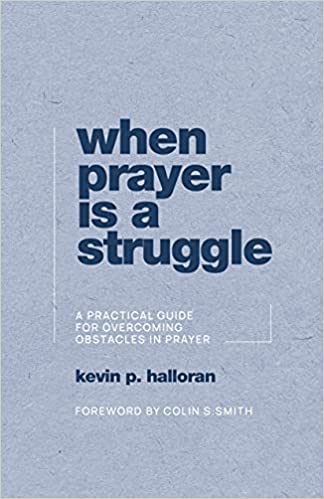
When Prayer is a Struggle by Kevin Halloran has one of the plainest covers of any book on my shelf. But with a title like that it doesn’t need an eye-catching cover. The words simply resonate. They are words in season. I suspect many think that the subtitle should read: A book especially for (insert your name).
I find prayer a struggle. Not always, but often. And if you were to audit my praying, then you might wonder about the quality of my relationship with God. The good news is that I don’t have to pray. I’m not being marked on the length, depth or breadth of my prayers. God has given me a Triple A Pass — Access All Areas. An invitation to come to him, speak with him, ask him for what I need, thank him for what he has done, confess what I’ve done or failed to do, and fundamentally give God the honour and glory in all things.
I’ve been reading through When Prayer is a Struggle and been encouraged to value spending time with God. This is a book to read slowly, carefully, and prayerfully! I sometimes skim-read books, but I’m taking my time with this one. The author is taking me on a journey of hearing God in the Scriptures and responding to God in prayer. He models prayer throughout his book:
Father God, thank You for calling me to be part of Your family in Jesus. You know my struggles with prayer, my lack of faith, and my lack of love for You and others. Help my unbelief! Increase my love. Cause me to see the world as You do and to see prayer as a gift from Your gracious hand. Convict me of sin and lead me to treasure the cross more greatly. Thank You for all You’ve done for us by making prayer possible and powerful. In Jesus’s name, amen. (p16)
Halloran starts by focusing on the Lord’s Prayer. He reminds us why prayer matters and how it focuses firstly on God and only secondly on us. We pray to bring honour to God and to unite our hearts with his. Prayer lifts our eyes above ourselves and draws us into God’s vision for his world.
This book is subtitled A Practical Guide for Overcoming Obstacles in Prayer. It includes recommendations for what to pray, how to focus our prayers, how to let Scripture inform our prayers, and how to respond when we don’t know what to pray.
The approach to prayer is gospel-shaped. We are not shamed into praying by preying upon our guilt. The gospel frees us to take up the privilege of praying. We are invited to mourn our sin, but to rejoice in the sanctifying work of Jesus. Our false views of God are challenged and replaced with a cross-centred perspective. We are privileged to have access to our Heavenly Father in prayer. Halloran shows an understanding of our mixed motives for prayer and we are encouraged to press on, as his redeemed children.
There are some good tips for staying focussed, for building routine and structure, for praying regularly, for having the content of our prayers shaped by God’s concerns, and for overcoming our petty excuses for not praying. There is a whole chapter devoted to praying in the face of fears and anxieties. Very timely given our stressful circumstances.
I’m glad that I didn’t judge this book by its cover. I’ve read it once and I’m beginning to make some changes when it comes to prayer. I plan to read it again with a view to also encouraging others around me. Prayer is a struggle. It always has been, but we have the help of God’s Spirit who enables us to call on God our Father.
I have been one to avoid the Christianity Today podcast, The Rise and Fall of Mars Hill. I didn’t want to join the voyeurs. It wasn’t my business. I have a church to lead, people to pastor, leaders to mentor, books to read, things to do. I don’t need to spend 15 or more hours being infotained by a church tragedy.
But a few days back, I was challenged to listen to the Rise and Fall. At the encouragement of a friend, I thought I would at least listen to the final episode, The Aftermath, to hear the impact on the lives of so many people who had been caught up in what Paul Tripp describes as the most toxic church culture he had ever experienced.
A few days later, many walks up and down our beach, and I’ve now listened through the entire series. What do I make of it? It’s extraordinary. In this internet age, we get to listen in to conversations, sermons, meetings, interviews, that paint an amazing and yet disturbing picture. It’s compelling listening. Sobering. Disturbing. Heart-wrenching. And, in so many ways, closer to home than I ever imagined.
I’d love to reflect on some of the lessons and the warnings for those of us in Christian ministry. To be honest, on a smaller scale, I’ve seen and experienced much of what is described in the series. I’ve assisted in churches processing the fallout of a narcissistic leader. I’ve witnessed the damage caused by leaders who churn through staff. I’ve been exposed to pastors with a ‘you’re either for me or you’re against me’ mindset. I’ve gone from being a friend to a foe simply by listening to an alternative point of view. It’s more than thirty years since I started out in Christian leadership and over that time I’ve seen and heard too many stories of ministers behaving badly. It’s not hard for me to see the reality of Mars Hill by looking at others, but I want to consider first what I can be learning—and this may take some time. There are many, many issues to consider.
It’s not about me.
A major concern of the Podcast is how a vision for ministry in Seattle morphed into the vision to build the Mark Driscoll personal brand. And how the leadership and the church were complicit in fuelling the vision. As brand ‘Driscoll’ grew, so the church grew, so the opportunities for the gospel expanded, so the influence on others’ ministry multiplied, and so it rolled on. Mark Driscoll was the centre piece of the puzzle and, according to those close to him, brand ‘Driscoll’ eclipsed honouring Jesus.
I’m reminded of the untimely exit of James O’Connor from Australian Rugby Union in 2013. There had been numerous ‘off-field indiscretions’, but the deeper problem was O’Connor’s explicit verbalised commitment to ‘building his own brand’. In a team sport such as rugby, there is a massive culture clash here. If we cringe at this for something so inconsequential as rugby, then how much more should we take notice when someone makes ministry all about them. We should remember the words of the psalmist:
Not to us, Lord, not to us but to your name be the glory, because of your love and faithfulness. (Psalm 115:1)
But what about me? It could be ironic that I am writing a blog post on this. Look at me humble-bragging about me! Writing builds profile. Not just a pastor, but a blogger. Make that an author too. Record your sermons and put them online. Check out the number of hits. Until Covid hit, we only ever recorded audio, now we’ve moved into video, then we need a better microphone, and a better camera, and a website to deliver it. I have felt the Driscoll-danger of preaching to the camera instead of to the congregation. The temptations are subtle. The rationalisations are easy.
It’s easy to justify a library of video sermons on the church website. They bless the regulars who miss church. They enable the sick and vulnerable to receive teaching. They can provide a lifeline to churches without a pastor and isolated Christians. They effectively advertise the church and the importance of expositional preaching.
And yet the dangers of pride are real. Does my self-esteem rise and fall with the number of downloads, likes, or comments? Do I hog the pulpit? Am I encouraging other preachers? Do I have to get my way? Do I make it easier or more difficult for people to disagree with me? Do I need the accolades? Am I depressed when no one thanks me? Do I make ministry about me?
It seems funny to draw these comparisons with Driscoll and Mars Hill. Millions of people listened to his sermons and thousands attended his churches. We might get a hundred downloads or a hundred attend church on a good day. But it’s not about circumstances. It’s a heart problem. Deep down I need to keep asking who my life is about? Am I serving my own interests, or am I willing to be anonymous, as I serve Jesus and his church? I need to remember that Jesus said:
“Be careful not to practice your righteousness in front of others to be seen by them. If you do, you will have no reward from your Father in heaven.” (Matthew 6:1)
Over the years my resolve to regularly read the Bible daily has waxed and waned. Among my problems are that I get bored repeating the same thing day after day, and I’m easily distracted. What was I saying? If you’re like me, then here are some tips that might help to keep things fresh so that you can persevere.
Find a translation that’s easy to read, yet faithful to the original. A paraphrase like The Message is easy to read, but it doesn’t stick closely to the text. The New American Standard Version sticks very closely to the original text, but it can be hard going, especially if you don’t count yourself an avid reader. My tips are to use a New International Version, or a Christian Standard Bible, or an English Standard Version. If you regularly use the NIV, then you might want to stick with it, but mix it up with one of the others from time to time. The advantage of using your regular Bible is that you get the feel for where things are. An advantage of using a different version is that you hear things slightly differently and this can aid your understanding. I will often open my CSB looking for some fresh insights.
If you have studied the Biblical languages of Greek or Hebrew, then this offers another opportunity for digging deeply into the Bible text. Do some translation for yourself. If you can’t sustain all your Bible reading this way, then perhaps choose a few verses once a week to dig into more deeply.
Writing the Bible out is a helpful way to read slowly and let it soak in. You could aim to type the entire Bible onto computer over the course of a year or more. Or you could write out a key verse each time you read a passage. The process of doing something tactile with what you read is a proven aid to remembering what you read.
This year I am following a couple of Bible reading plans. One of these plans I will read, and the other I will listen. Listening to someone read the Bible well is a great help to hearing the Scriptures making sense. I am following the NIV read by David Suchet, who speaks with an English accent. I have it as an app on my phone. It’s beautifully read and particularly helpful when following large sections of narrative. There is a newly released audio version of the ESV read by Kristyn Getty, who has a gentle Irish accent that I find easy to listen too.
It’s easier to stick at something when you’re not the only one doing it. Find a reading partner or group. This could be your husband or wife, friends or children, small group, or even an entire church. You could physically read together, with people taking it in turns to read out loud. Or you could commit to reading at the same time, wherever you are, and then check in each other to see how it’s going.
You could follow a do-it-yourself plan, like S.O.A.P. Each time you look at the Bible, you follow four steps: Scripture, Observation, Application, Prayer. Read it first, maybe more than once. Then, what observations do you make about what it means? Any questions to resolve? What does it teach about God? How does it point to Jesus? How does it call me to respond? Allow time to apply the passage, focusing on how it calls you to trust Jesus and to turn back to him. Then spend some time praying about what you learn.
If you are following a plan, then don’t give up if you fall behind. It took me five years to complete a three year Bible reading plan, but I’m glad I persevered.
12 months ago, people seemed full of anticipation for the new year. We couldn’t wait for the horrors of 2020 to be over. We looked forward to getting back to normal in 2021. We were hopeful of better days ahead.
Fast forward to today. It’s New Year’s Eve and it’s surprisingly quiet. People aren’t prophesying better days to come. I’m not hearing excitement or anticipation of freedom. All I’m hearing is… well I’m not really hearing anything. No optimism, no determination, no great plans, no real hope. The numbers are staggering, the queues are growing, the goal posts are changing, the spin doctors are running out of things to say. The future looks grim, and hope has slipped away.
If that’s how you’re feeling, then we all get it. We’re being confronted with circumstances we can’t control. We thought we had this, but we don’t. We’re not the masters of our own destiny.
But here’s the thing. We’ve never been in control. We’re always impacted by circumstances. People get sick, they die. It’s always been that way. Nothing has changed. We’ve been living in a fool’s paradise thinking that we can build our utopias and keep ourselves healthy and wealthy and free from worry. Finally, we are getting a reality check.
But there is hope. And it’s very real. It’s not to be found in better circumstances, or by eradicating a virus, rebuilding a stronger economy, regaining freedoms to travel, rediscovering job security, or in any earthly measure. Solid hope is to be found in one place and one place alone. Real hope comes from knowing God, from learning to be content whatever the circumstances, from understanding this life isn’t all there is, and from trusting that nothing can separate you from the love of Christ.
35 Who shall separate us from the love of Christ? Shall trouble or hardship or persecution or famine or nakedness or danger or sword? 36 As it is written:
“For your sake we face death all day long; we are considered as sheep to be slaughtered.”
37 No, in all these things we are more than conquerors through him who loved us. 38 For I am convinced that neither death nor life, neither angels nor demons, neither the present nor the future, nor any powers, 39 neither height nor depth, nor anything else in all creation, will be able to separate us from the love of God that is in Christ Jesus our Lord.
If you want to find hope in 2022, then please let God know. He’s waiting on you to call out to him. He will answer your fears and doubts. He will lift your eyes to the matters that matter most. He will secure your future come what may. He doesn’t promise that life will be easy, but he promises to be with you every step of the way.
Rico Tice’s little book, Faithful Leaders, is a word in season. Sadly, 2021 has been another year where there have been too many failures among Christian leaders. And by failures, I don’t mean underperformance, or failure to meet KPIs, or even leaving the ministry due to stress or burnout. I mean moral failure. Whether it’s the cover up of sexual immorality, or failure to disclose extra income, or flirting with a member of the congregation, or bullying behaviour toward other staff, or selfish pride that demands to get its own way, or unwillingness to be questioned or scrutinised, or any other moral failure.
I keep hearing references to the Mars Hill podcast (I haven’t listened to it) and people saying that we need to be more accountable. I get that. The sad reality is that we may be more likely to address our sin when others can see it. The fact that God sees it all the time doesn’t seem to motivate us as much as having to face up to our board, or bishop, or congregation. Why is this? Does it mean that we’re more worried about public shame than dishonouring God? Do we really think we’ve got away with something if no one has seen?
The Christian tradition that I’m a part of, emphasises the importance of three things for Christian leaders: character, convictions, and competency. We say that character is king, but I wonder if we truly believe it. We can be easily dazzled by the achievements on a CV or the size of a ministry or some perceived leadership strengths. Character is less clear, absent on a resume, harder to assess in interviews. If we don’t show due diligence in following up referees then we can hardly claim we value character.
There are many leadership books on conviction and competency—I have shelves full of them. There are fewer that focus on the leader’s heart. Faithful Leaders is one such book that looks at the importance of Christlike character and attitude in Christian leaders. It argues that the spiritual health of leaders plays a large part in determining the spiritual health of the congregation and therefore the success of the ministry.
Rico Tice calls for a Biblical definition of ministry success. This is not so much about numbers of people involved, but about handling God’s Word correctly and ministering it to the hearts and minds of others. This is how God works in and through his people. He calls every leader to be diligent in looking to the gospel and battling sin in response.
This book has an important focus on self-leadership, living a godly life both in and out of the public eye. Finally, it calls the Christian leader to serve the church, rather than using the church to serve his or her needs. We are reminded that we follow in the footsteps of the suffering servant, who came not to be served but to serve. This book is short and punchy. It’s not rocket science—it’s much more important than that!
I purchased copies of Faithful Leaders for each member of our church staff and leadership team. Our council meetings have included one person sharing a review of a chapter and drawing some implications for our ministry. We have found this helps us remember who we are and how we are called to serve before we get into the nuts and bolts of the meetings. Perhaps you and your team could be strengthened by a similar approach as you launch into the new year.
I have struggled to prioritise rest, often seeing it as an absence of work rather than a blessing from God. In the early years of my ministry I developed a habit of working late into the evenings (or early mornings) to achieve a high volume of work. When I had space, my tendency was to add more work rather than see it as an opportunity for margin. My proclivity to overwork, and working with insufficient rest, has continued through the years. Sadly, I’ve often taken my wife and family for granted in my busyness. Let me reflect on a few lessons that I am still learning about God-given rest:
1. The Scriptures encourage us to value the gift of rest. They move through the picture of God working and resting, establishing a pattern of daily and yearly sabbath rhythms, to the final eschatological fulfilment of rest in Christ. God made us to work and to rest, but we are not defined by the six days or the one. God calls us to keep our focus on the rest Jesus offers—a rest for our souls. Understanding this has rescued me from my early foundations of legalistically doing no work on Sundays, but I am yet to fully treasure God’s sabbath rest.
2. Rest is not optional. Recent health issues and the creeping of the years have led me to be more realistic about the importance of rest. Sleep is essential to nurturing our physical, mental, social and spiritual health. God could have created us without a need for sleep, but he did not. Even his Son required sleep while on earth, so why would I push on as though I had more capacity than Jesus?
3. Rest is vital to effective work. Rest is not merely the absence of work, but a variety of restorative processes that enable creativity, productivity, satisfaction, fulfilment and more. God has created us to function well and live productively through good rest. Such rest can take many forms. It can be active, challenging, playful, sleep, naps, exercise, sabbaticals and much more.
4. Rest creates margin. Margin enables us to cope with the extra demands that come our way. Given the complexity and uncontrolled nature of much ministry life, margin is critical to self-care and resilience. If we operate with full diaries and calendars, then any change or interruption will create a jam. This will lead to living in the ‘red zone’ of stress and burnout. Margin in emotional energy is an over-looked category for many Christian leaders. When we become emotionally overloaded, our resolve to serve God and love others gets eroded. Everything becomes more difficult. When we’re emotionally resilient, we can deal with much that happens.
5. Rest is loving to others. Overwork is unloving to others. Long hours, missed days off, for weeks on end, year after year. This isn’t a badge of honour. It’s a walk of shame. I’ve often failed to see or acknowledge that I’ve been taking others for granted. God’s call to take a day off has an impact for all around you. Others can rest because you are resting. Family can do things together, you can get time with your wife, go on holidays, contribute around the house, take an interest in what others are doing. Workaholism may not be as catastrophic as alcoholism, but it too can leave many people damaged.
6. Rest gives glory to God. As we embrace true rest in Christ, we are liberated from being pre-occupied with ourselves and our performance. I’ve recognised that some of my overwork has been driven by a desire to be seen as a high achiever. My unwillingness to value rest has been caused by a failure to see rest as a generous and vital gift from God. The Sabbath has always been about trusting God to be at work when we are not. True rest is about giving God the glory that only he deserves.
Further reading:
Alex Pang, Rest: Why You Get More Done When You Work Less. Great Britain: Penguin Life, 2018
Matt Perman, What’s Best Next. How the Gospel Transforms the Way You Get Things Done. Grand Rapids: Zondervan, 2014 (Chapter 16)
Geoff Robson, Thank God for Bedtime. Sydney: Matthias Media: 2019
Peter Scazzero. The Emotionally Healthy Leader. Grand Rapids: Zondervan, 2015
Richard Swenson, Margin: Restoring Emotional, Physical, Financial, and Time Resources to our Overloaded Lives. (Revised Ed.) Colorado Springs: Navpress, 2004
I grew up reading something from the Bible most days. We would often read a few verses as a family around the dinner table. I would read bits of the Bible as I headed to bed each evening. Sometimes I would find help from reading guides or devotional books that drew application from the Bible passages or gave explanations as to their meaning.
My first Bible was a Revised Standard Version given to me by my grandparents, and I shifted to a Good News Bible in my teens. This gave way to a New International Version when I started university and began exploring the Bible in more detail. These days I have multiple translations available and a Bible App on my phone and computer that allows me to read the Bible in any version.
Reading the Bible is both similar and different to reading other books. Most books are intended to be read from cover to cover. You start at the beginning and follow the plot to its conclusion, usually on the final page. However, when it comes to the Bible very few of us read it this way. The Bible is one book, but it is also a compendium of sixty-six books. There is a coherence to each book in the Bible and an overarching coherence to the Bible as a whole. There’s a kind of dialogue that takes place with each part informing the overall picture and the overall picture informing each part. Some parts only start to make sense after we’ve read other parts and the key to understanding it all is discovering the central place of Jesus Christ. The Old Testament points to Jesus Christ and only makes sense once we recognise that all God’s promises find their fulfilment in him. The New Testament spotlights the life, death, and resurrection of Jesus and explains how this good news transforms people’s lives for eternity.
So, let me ask you, have you read the Bible? Not just sampled it—but have you really read it? Have you searched the Scriptures to discover God’s word to you, God’s purpose for life, God’s love for his world, God’s hope for our future? Have you delved deeply into the Word that brings life, and have you done this with regularity, and purpose, and effort, and humility? Have you drank deeply from God’s Spirit-inspired Word?
Why not make 2022 the year you either begin or get back to searching the Scriptures? Some years back I made the decision to do exactly that. I found a plan called Search the Scriptures that would help me read the whole Bible in three years. It took me close to five years as I would keep missing days! It provided a plan that led me through the whole Bible and let me move between Old and New Testaments. It didn’t spoon-feed me answers or give me inspirational stories. It just kept me on track by asking helpful questions of each section of the Bible and I’d write my answers in a notebook.
When I first bought Search the Scriptures it came in three volumes — one for each year. Now you get the whole three years packaged together into one volume. You can even get an English Standard Version of the Bible with the Search the Scriptures questions inserted into the text. This might be helpful if you were travelling and only wanted to carry one book, but I prefer to keep my notes separate to my Bible.
Over the years I have given away dozens of copies of Search the Scriptures. And I’m still getting feedback that it genuinely helps people to read the Bible for themselves. Why not give it a shot?
Would you like to join me in reading the Bible in 2022? My plan is to read it cover to cover following a plan that gets me reading Mondays to Fridays every week. The beauty of this plan is that I can use weekends to catch up if I get behind. Or I can do something different on Saturdays and Sundays.
Tim Challies recommends this Bible reading program, which enables you to read the entire Bible (or just the New Testament) in one year while only reading five times a week. Reading the whole Bible in a year is doable — even for those who wouldn’t see themselves as good readers. It just takes stickability. If you’re like me, and have failed repeatedly to read the Bible every day for 12 months, then this plan might well be the answer.
The Old Testament readings follow an approximate chronological order. The New Testament readings spread the Gospels out throughout the year to keep you regularly coming back to the life and teachings of Jesus.
Challies recommends doing the readings in the order they appear on the Schedule. You can check off each day’s reading, and then check off each week in the Weekly Progress Register. If you really want, you can get ahead by continuing the plan on weekends. It’s encouraging to see how systematically you progress through the Bible and how rewarding this can be.
Before you start each reading, ask God to help you get to know him better, that you might trust him more completely and follow him more closely.
I will be kicking off my plan on 1 January 2022. If you’d like to join me, then I’d love to hear from you. Click below to download Bible Reading Program.
My other tip for reading the Bible in a year is to write a few notes as you go. Get yourself a cheap exercise book, spend a little more for a fancy notebook, or find a diary with enough room to write some notes. Jot down what you learn, any questions to follow up, and what you plan to do in response to God’s Word. This can also give you things to pray each day, as you talk to God about what you are learning.
Today marks 10 years since I was diagnosed with Stage 4 ALK+ lung cancer. 10 years! I’d been given 10 months. And it’s been 10 years! That’s 3650 days, plus 3 for leap years. God has given me 3653 more days to number. What does it mean to number my days? The words come from Psalm 90:
12 Teach us to number our days, that we may gain a heart of wisdom.
13 Relent, Lord! How long will it be? Have compassion on your servants. 14 Satisfy us in the morning with your unfailing love, that we may sing for joy and be glad all our days. 15 Make us glad for as many days as you have afflicted us, for as many years as we have seen trouble. 16 May your deeds be shown to your servants, your splendor to their children.
17 May the favour of the Lord our God rest on us; establish the work of our hands for us— yes, establish the work of our hands.
I’m learning not to take my life for granted. It’s not random or accidental—it’s a gift from God. He has made me for his purposes. And his purposes are far greater than any I could manufacture for myself.
I’m a very slow learner. So it’s taking some time to start each day with my heart fully satisfied with God’s unfailing love. Gratitude hasn’t been my strong suit. I fail to see what’s in front of my face. A beautiful wife, an awesome family, a fantastic church, some fabulous friends. I struggle to say thank you to doctors and nurses, and scientists and pharmaceutical companies (yep), and my cancer crew who’ve walked this challenging journey with me. But worst of all, I often forget the solid constancy of God’s unfailing love.
I’m so tempted to attach God’s love to my circumstances: It’s sunny—he loves me. It’s raining—he doesn’t. I’m NED—he loves me. The cancer’s back—he doesn’t. I’m happy—he loves me. I’m depressed—he doesn’t.
God’s love is truly unfailing and deeply satisfying. He has demonstrated his love by sending his precious son. The death of Jesus is God’s promise of love, written in blood. If you grab hold of this love, then no one and nothing can take it from you. Do you know this love? Does it satisfy you every morning?
I’ve been given 10 years. 3653 precious days with my family. 3653 days to love and serve my Father in heaven. 3653 days to make a difference in this world. 3653 days to face my failures and find forgiveness from my Father in heaven. And every one of these days has been a gift from above.
I thank God for his kindness. I thank you for your prayers and support over the past 10 years. I have no expectation and certainly no claim, but I’d love 10 more years, and perhaps 10 more after that. But deeper still, I have a hope beyond this life, a hope beyond cure. And I look forward to the day when there will be no more tears, no more pain, no more suffering, and no more death. God has promised an eternity with him for all who trust in Jesus.
If you want to know more about this hope, then send me a note.
Resilient Ministry by Burns, Chapman, and Guthrie has remained unopened on my bookshelf for the past five years. This has been an unfortunate mistake. It is a rich resource that would have served me well in my ministries of leading churches, a denomination and, more recently, in mentoring, coaching, and pastoral supervision. Anachronistically, I wish this book had been required post-theological college reading when I began ministry in 1990.
The central thesis of Resilient Ministry is that there are five themes integral to resilient ministry. These themes emerged from analysing the data from multiple pastors’ summits, where cohorts of pastors shared together about their joys and struggles in ministry. The authors have continued to test-drive and implement these themes to build resilience among pastors and their teams. The five themes for resilience are spiritual formation, self-care, emotional and cultural intelligence, marriage and family, and leadership and management. Each of these themes is addressed in two parts that can be described loosely as diagnosis and prescription.
Spiritual formation Theological knowledge does not automatically translate into maturity. A theological degree or ongoing Bible study can fill the head without filling the heart or shaping the hands. Pastors must remember they are always sheep first and shepherds second. Pastors are at risk of “building their identities and worth around their roles and performance rather than being beloved children of God.”[1] It is essential to be nourished by a deep interior life with God in order to be equipped to work for God.[2] Spiritual ministry should come from the overflow of a heart shaped by God.
Data from the pastors’ summits identified key practices for growing in spiritual maturity. These included building rituals and rhythms into life, especially around spiritual disciplines such as prayer, keeping Sabbath, personal and corporate worship. Pastors craved confidantes with whom they could be accountable. Intentional reflection was recognised as essential for watching your life and doctrine and can lead to ministering from a place of humility and ongoing learning.
The importance of spiritual formation resonates for me in ministry. I have learned to apply every sermon and Bible study to myself before asking how it might apply to the congregation. I need to slow down, reflect, and spend more time meditating on God’s Word, asking God to transform my heart. However, I tend not to use the language of ‘spiritual formation’, preferring to speak of being ‘transformed into the likeness of Christ’ (Romans 12:1-2). I believe this helps me to be more discerning about the range of spiritual recipes on offer by asking “will this help me to grow in Christ-likeness?”
Self-Care Pastors must admit and appreciate that they are creatures with physical, mental, emotional, social and spiritual needs. This impacts such areas as sleep, boundaries between family and work, exercise and diet. Some pastors embrace a formula of ‘burning out, rather than rusting out’. The authors identify this as a false polarity, recommending a better approach is “burning on, not burning out.”[3] They describe many pastors as people-pleasers, struggling with the “never-ending treadmill of trying to satisfy others whose expectations cannot be met.”[4] Ministry can also become an idol, leading to people neglecting self-care in order to achieve ‘success’ in their ministries. The problem of pastors finding their identity and purpose in their work rather than in God means that a perceived ‘successful’ ministry may cover over personal failure.
Engaging in quality relationships is promoted as vital to self-care. Especially significant is the opportunity to find encouragement from cohorts of peers outside the pastor’s immediate ministry context. Creating margin in life and ministry and taking time to recharge are important for longevity in ministry.
Self-care has been an ongoing challenge for me. As I reflect on three decades of ministry, I can see how I have sacrificed self-care on the altar of ministry drive and ambition. This has led to patterns of inadequate sleep and exercise, insufficient margin in daily timetables, missing days off, and pushing on until sickness has caught up with me. Many years I would expect to crash physically and emotionally after a particularly busy period in June and July. Annual holidays became an important but insufficient ‘catchup’ for my periods of neglecting self-care.
Being diagnosed with terminal cancer confronted me with critical questions around my identity and my dispensability. No longer able to preach, lead, or pastor a church, I was painfully and yet wonderfully reminded that my true and enduring identity lies in being my Father’s adopted son. Over the years since, as my health has improved and I have returned to pastoral ministry, these bad habits have continued to haunt me and I have sought help from my mentors to keep addressing challenging matters of self-care.
Emotional and cultural intelligence A strong theme in both these areas concerns how easy it is to “assume that our way of looking at things is the only way to look at things.”[5] Emotional intelligence involves insight into our own emotions and the ability to respond well to the emotions of others. Cultural intelligence involves awareness of the different belief systems, values, customs, assumptions, practices, and the like, that shape how people see themselves and relate to others.
Reflection is one of the key factors identified for building emotional intelligence. The authors suggest such practices as journaling, exploring family genograms, differentiating to connect with people, and welcoming feedback as strategies for growth. My experience concludes that growth in EQ is a critical characteristic of effective and safe ministry to others. It bridges the categories of character and competency and should be considered when appointing, assessing, and coaching leaders.
Cultural intelligence is also a critical factor for effective ministry. Empathy is required to understand where people are coming from, what has influenced them, and why they hold certain values or worldviews. One of the reasons that ministries fail to embrace changes in society around them, and subsequently die, is that ministry leaders lack cultural intelligence. Again, the authors highlight reflection as one of the necessary means to building CQ.
Marriage and family The summits identified marriage and family as playing a critical role in sustaining pastors. Thus, spouses were invited to participate in aspects of the program. The challenges lay in the areas of navigating boundaries between marriage and family life on the one hand and the job of ministry on the other. There are significant stressors for pastors who often work from home, don’t clock off, and don’t tune out. Damage can easily be done to marriages and families when the pastor is unable to manage the complexity of dual or multiple relationships.
I have especially felt these challenges and pains. There have been many times when I have been overly busy to the neglect of my family. While I have sought to be present with my wife and family, I know there have been times when they have been left with the dregs. This has been compounded over the years of juggling cancer treatment and trying to maximise ministry in the good periods. Loving my wife, children, and now grandchildren, is a matter of importance where I want to keep improving.
Leadership and management The authors embrace the images of poetry and plumbing to describe the differences between leadership and management.[6] They identify reflecting as an important and real leadership work. This is the picture of working on the ministry, not just in the ministry. In my experience, and as I have observed and coached other pastors, this is a neglected discipline. Efficiency often trumps effectiveness. Leaders, operating without margin, keep getting more and more busy without seriously evaluating what they are doing.
Resilient Ministry highlights the treasures to be gained through systems analysis, especially through deliberately building maturity into our church systems. Understanding church systems opens new doors of EQ and CQ that can lead to a growing calm among leaders. This has been a watershed resilience area for me, as it has led to growing awareness of what I can and cannot do, and to trust God more and more.
The authors identify “modelling, shepherding, managing expectations, supervising conflict, and planning”[7] as essential plumbing tasks. I am aware that not all these are adequately explored in theological training, which means that many pastors are ill-prepared for the pressures of leadership. There is a need for specialised professional development throughout ministry. My early experiences of conflict in ministry, grappling with leading organisations, learning to train, supervise and mentor leaders, quickly highlighted the gaps in my college education and set me on a continual life-long learning trajectory.
Further reflections
Firstly, the integration of features contributing to resilience in ministry is a big strength of this work. There is no silver bullet for resilience, but rather a complex interaction of many factors.
Secondly, personal reflection is a valuable practice that helps builds resilience in all five themes. Busy ministers must set aside time to slow down and reflect on themselves and their ministries. Without such reflection pastors will burn out, while repeating the mistakes of the past over and over.
Thirdly, Resilient Ministry leads pastors to recognise the vital impact that can be made from reflective practice in conversation with a confidante. As a ministry mentor, coach, and pastoral supervisor, I will draw on this book in shaping my work in helping pastors and ministry leaders to grow more resilient. This book contains excellent questions for reflection, modelling what it preaches. I intend to ask these questions of myself and others.
Lastly, one weakness of this book is its limited engagement with the Bible. Being primarily the analysis of data gleaned from summit participants, it requires further analysis to determine how well the diagnoses and prescriptions fit with the Scriptures. I know that many of them will fit well, and I plan to explore these themes with my Bible open.
[1] Bob Burns, Tasha Chapman, and Donald Guthrie. Resilient Ministry: What Pastors Told Us About Surviving and Thriving. Downers Grove, IL: IVP Books, 2013. P32.
[2] Peter Scazzaro in Emotionally Healthy Spirituality, quoted in Burns, Chapman, and Guthrie. P37.
[3] Dave Gibbons in The Monkey and the Fish, quoted in Burns, Chapman, and Guthrie. P61.
December has arrived and there are now only 25 days until Christmas. How is your planning going? Are you planning to cross state borders, to holiday at the beach, to catch up with family, to put on a big lunch, to splurge on presents? Have you ever stopped to consider God’s plans for Christmas? Not just our annual public holiday, but the very first Christmas—the arrival of Jesus. God’s plans had a very long lead up and they were far more expensive than we could ever imagine.
I want to invite you to join with me reflecting on the real meaning of Christmas over the next 25 days. We will spend the first 12 days of Christmas exploring God’s advance planning in the Old Testament. The next 12 days we will look closely at what God was doing as he sent his Son into the world. I will be following a book, written for families to help adults and kids understand Christmas beyond the festivities and consumerism. This is a message of rescue and we are the ones who need it.
If you would like to explore A Jesus Christmas: Explore God’s Amazing Plan for Christmas by Barbara Reaoch, then I encourage you to seek out a copy asap. If you would like to join me as I present daily short talks on YouTube, then you will find the first talk here. You can subscribe and click on the bell to receive notifications of each new talk.
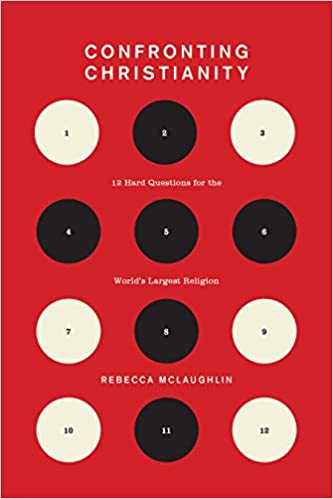
Confronting Christianity: 12 Hard Questions for the World’s Largest Religion by Rebecca McLaughlin is one of the most impressive defences of the Christian faith that I have read. It is robust, educated, well researched, gentle, and empathic. This is a book for people willing to take the time to consider challenges to Christian beliefs. Today’s culture tends to shut down reasoned discussion of theology, humanity, religion, and ideologies running counter to the winds of society. McLaughlin reopens the discussion and argues persuasively that Christian faith is a very reasonable worldview to hold.
McLaughlin doesn’t shy away from the tough questions. A scan of the chapter headings reveals her willingness to confront the big challenges:
Aren’t we better off without religion?
Doesn’t Christianity crush diversity?
How can you say there is only one true faith?
Doesn’t religion hinder morality?
Doesn’t religion cause violence?
How can you take the Bible literally?
Hasn’t science disproved Christianity?
Doesn’t Christianity denigrate women?
Isn’t Christianity homophobic?
Doesn’t the Bible condone slavery?
How could a loving God allow so much suffering?
How could a loving God send people to hell?
This isn’t a book that sweeps the problems under the carpet. McLaughlin acknowledges the harm and problems created in the name of religion and, specifically, Christianity. The history of Christians is a history of failure and weakness, but it doesn’t destroy the credibility of the faith. McLaughlin shows a deep understanding of history, she faces the challenges of contemporary culture front on, and she displays a deep understanding of the biblical text. Her experience in the world of academia, her empathy for people struggling with their identities in a changing world, her willingness to listen carefully to the critiques of others, and her clarity of conviction in her argument are all on display in this book.
There are many surprises in the pages of this book. We discover things about the author, her research and experience, her family and friends that give us confidence that she is not one for trite or simplistic rhetoric. She understands and feels what she writes about.
It is no surprise to me to discover that Confronting Christianity has been awarded the Christian book of the year in 2020. Having read it, I have already started giving copies away to others. I anticipate keeping one or two extras on my shelf for interested enquirers and religious sceptics alike. I will recommend it to new and old believers who are wanting to better understand their beliefs in today’s critical climate. I suggest purchasing at least two copies. One for yourself and the other for someone you care about.
O Christmas Tree by Judith Hickel and Sarah Ang takes a gospel-shaped musically-inspired, fresh look at the meaning of Christmas. This is an attractive book that invites small children (and their adult readers) to explore a deeper significance to some traditional Christmas decorations. Children are drawn into the story through guessing games and familiar musical introductions. We are invited to rethink Christmas trees and baubles and presents and a star. If we’ve grown a little tired of Christmas decorations—ho ho ho, hum, hum, hum—then this book reminds us what an amazing event we are celebrating . We are lifted beyond predictable nativity scenes to explore the good news of Jesus with fresh eyes and ears. The message gets embedded and reinforced as we sing along to Christmas songs with some new and improved lyrics. And I think they might just catch on.
The author, Judith, is an Australian living in Germany, who writes within a European context. Those who love a white Christmas with all the trappings will warm to this book. That said, Christmas is a universal message, that is just as relevant under the heat of an Aussie summer. O Christmas Tree makes a great gift idea for small children this Christmas. And especially those who love a singalong.





 Confronting Christianity: 12 Hard Questions for the World’s Largest Religion by Rebecca McLaughlin is one of the most impressive defences of the Christian faith that I have read. It is robust, educated, well researched, gentle, and empathic. This is a book for people willing to take the time to consider challenges to Christian beliefs. Today’s culture tends to shut down reasoned discussion of theology, humanity, religion, and ideologies running counter to the winds of society. McLaughlin reopens the discussion and argues persuasively that Christian faith is a very reasonable worldview to hold.
 macarisms